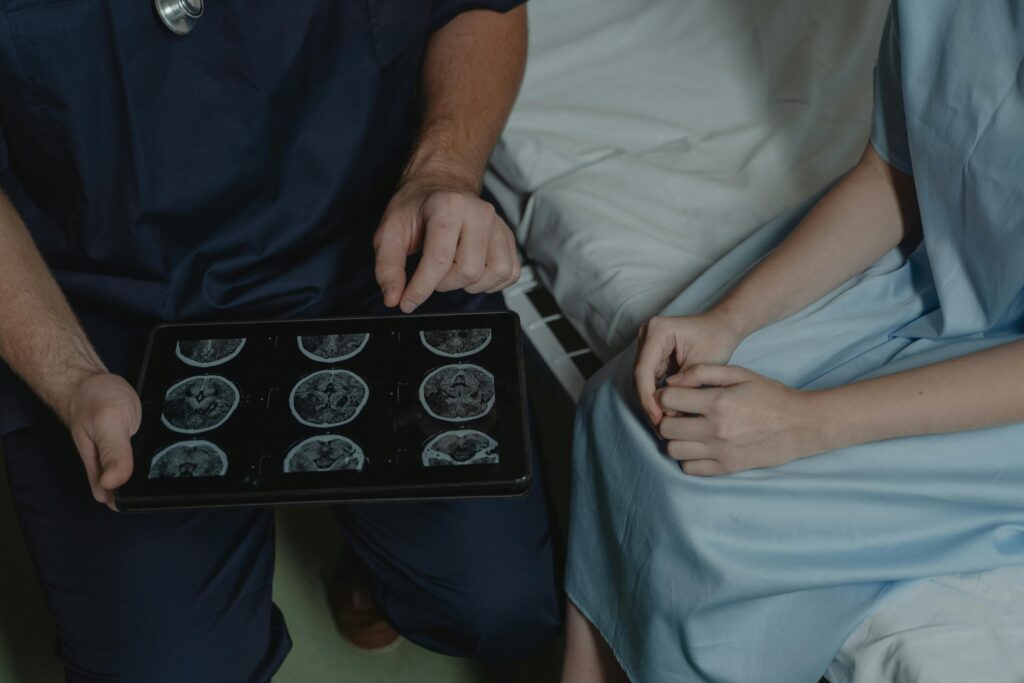
We are constantly reminded of the importance of patient centred care. To truly improve healthcare, we need to listen to real patient experiences, and that is where self-ethnographic tools come in.
Here is how they transform healthcare studies:
- Capture real world experiences: See how patients navigate their health journeys outside of clinical settings.
- Track behaviours over time: Gather longitudinal data on medication adherence, lifestyle changes, and treatment effects.
- Understand emotional impact: Hear firsthand how conditions and treatments affect patients’ mental and emotional well being.
- Improve patient centred care: Use rich, qualitative insights to refine healthcare services and enhance patient support.
- Reduce recall bias: Collect in-the-moment reflections rather than relying on post hoc surveys or interviews.
At Field Notes, we understand that healthcare is not just clinical; it is deeply emotional. Our intuitive research platform lets you engage with patients, healthcare professionals, and key opinion leaders all over the world to uncover the authentic human stories behind the data.
Reducing Recall Bias with Authentic Capture
Traditional recall based research often struggles because human memory is fallible. If we ask patients to remember how they felt weeks ago, they might offer an idealised version or a best guess.
By using mobile video and audio diaries, we capture what patients actually do and feel in the moment. We have found that audio tasks, in particular, are an incredibly powerful way to connect with sensitive patient groups. It allows patients to document key struggles in an intimate, immediate way, perhaps while lying in the dark, without the pressure of having to be camera ready.
Understanding the True Emotional Impact
Standard trackers often miss the nuances of a patient journey, such as the anxiety of waiting for results or the confusion of starting a new medication. Using our AI-powered Journey Mapping tool, we automatically plot patient touchpoints on a timeline and use sentiment analysis to reveal emotional highs and lows based on what patients actually say.
For example, AstraZeneca partnered with our sister agency Peek to capture, via Field Notes, the emotional journey of patients living with mesothelioma. By using smartphone video capture, they were able to understand how patients come to terms with their diagnosis, generating powerful content to engage key stakeholders internally.
Tracking Behaviours and Prescription Moments
Self ethnography is not just for patients; we also help brands get closer to the exact prescription moments.
In another project, Leo Pharma worked with Peek to better understand the prescribing decisions for topical treatments. They connected with GPs and Dermatologists who uploaded post consultation videos directly to the Field Notes app, detailing the prescriptions they made and the reasons why. In total, over 400 videos were collected and edited into insight films to educate sales teams and inform wider strategy.
Building Trust to Improve Patient Centred Care
When dealing with sensitive healthcare data, privacy and trust are paramount. We operate with Privacy first principles and are fully GDPR compliant, and we ensure patient data is never used for training public algorithms. This secure environment allows brands to build genuine communities and support networks.
By focusing on empathy and giving patients a safe space to share their unvarnished stories, we can move the conversation from compliance to genuine understanding.
Ready to bring your patient journeys to life? Book a demo with Field Notes today to discover how our self ethnographic platform can transform your next healthcare study.