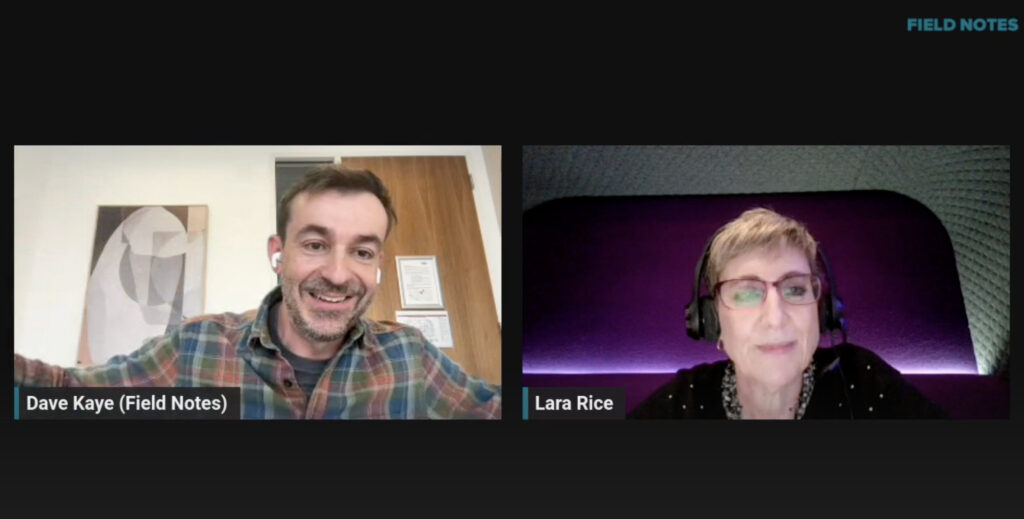
To help researchers pause, reflect, and prepare before the end-of-year rush kicks off, we hosted our annual Q4 Ready webinar series. Across four live sessions, we brought together four outstanding industry experts to explore how researchers can elevate their craft, write winning proposals, navigate AI tools, and build high-value client partnerships:
- Paul Griffiths, Founder of Client Advocates
- Marco Rovagnati, Co-founder of Quallie.Ai
- Pippa Keen, Senior Staff Researcher at Etsy
- Lara Rice, Senior Research Lead at BBC Studios
Here is our recap of the key learnings, expert advice, and quotes from this year’s series.
1. The Role and Limits of AI: Tactical Acceleration vs. Human Ownership
The adoption, ethics, and limits of artificial intelligence surfaced in every single discussion. Rather than treating AI as an all-or-nothing replacement for human research, all four speakers reinforced a pragmatic divide between tactical acceleration and strategic human ownership.
Operational Efficiency and Speed
On an operational level, AI is proving to be a fantastic assistant for data aggregation, rapid formatting, thematic sorting, and accelerating project workflows. From modeling streaming audience data to polishing proposal structures with generative tools, AI allows teams to eliminate administrative drag and to move faster.
The Irreplaceable Human Element
However, the consensus across the series was unequivocal: AI cannot replace human critical judgment, cultural empathy, or the deep understanding of why people behave the way they do.
Lara Rice (BBC Studios) pointed out that while AI handles surface-level pattern recognition well – such as tagging content as “high quality” – it struggles with localised cultural context. The emotional and social meaning of “quality” varies fundamentally depending on whether you are speaking to younger digital natives, UK audiences, or viewers across emerging international markets. As Lara observed:
“AI is good at recognising patterns… but what does ‘quality’ mean to different audiences? The word ‘quality’ doesn’t tell you what’s underneath, and it will take a long time for AI to really get to the heart of that – I don’t know if it ever will.”
Similarly, Marco Rovagnati (Quallie.Ai) warned against passive over-reliance on automated AI synthesis. When researchers blindly trust a generic AI prompt to summarise raw transcripts, they fall into the “helicopter trap” – arriving at a surface conclusion at the top of the mountain without having walked the trail to understand the subtle emotional nuances along the way. Human immersion remains the only way researchers can confidently stand behind their strategic recommendations.
2. Communicating for Action: Extreme Clarity, Brevity, and Executive Impact
A recurring critique throughout the series was the research industry’s habit of delivering overly dense, 100-slide presentations. To drive real commercial decisions, researchers must promote clarity, brevity, and outcome-focused messaging.
Front-Loaded Value in Proposals
Addressing the agency pitching process, Paul Griffiths (Client Advocates) highlighted that proposals frequently fail because they bury key recommendations under thirty pages of methodology. Paul advocated for front-loading value by placing a clear executive summary on page one:
“If you cannot on one page describe what you’re going to do, what the outcomes are, and how much it’s going to cost them, then you probably haven’t got clarity in your own head… Create a front sheet, that exec summary that lists those things out, which makes it really easy for clients to understand what you’re suggesting and to disseminate that information internally.”
Brevity That Travels
Whether pitching a brief to a new client or presenting debriefs internally to executives, materials must be synthesised for immediate comprehension. Pippa Keen (Etsy) shared that senior stakeholders operate in a high-velocity environment where exhaustive slide decks are rarely read. Instead, executive decision-makers require hyper-crisp, two-sentence summaries and bite-sized visual assets:
“A phrase that has been used that I don’t love, but is the reality of the world we’re working in now, is ‘summarise or be summarised’… So actually thinking, for our more executive audience, how can I be as crisp with them about what this means for them? And that might be two sentences… And those two sentences show up all over the business.”
Pippa noted that pairing these two-sentence summaries with short, authentic 30-second “talking head” participant video clips creates “outputs that travel” organically across an organisation to influence C-suite decisions.
Focusing on Client Outcomes
Across all sessions, the core advice for both proposals and deliverables was to shift from operational effort (“what we do”) to strategic business impact (“what you get”). Paul recommended replacing passive language like “we will conduct 1,000 interviews” with decisive, value-focused phrasing: “you will get 1,000 interviews that enable you to decide your market expansion strategy.”
3. Navigating the Tension of Speed, Velocity, and Strategic Rigor
Modern research operates in an environment of unprecedented pacing, creating constant tension between quick turnarounds and strategic depth.
The Pressure of Pacing
Internal stakeholders and brand teams are now equipped with AI prototyping tools that allow them to put ideas in front of users instantly. As Pippa Keen reflected, client-side researchers are constantly navigating how to enable this rapid momentum without becoming a friction point or a “thorn in the stakeholders’ side”. It requires accepting that few product decisions are permanent “one-way doors” – most initiatives can be launched, evaluated, and pivoted as new evidence comes to light.
Strategic Substance Over Mere Speed
However, our speakers cautioned against sacrificing rigor for pure speed. Marco noted that because basic execution has been commoditised by tech, the true commercial value of research has returned to critical thinking, deliberate immersion, and thoughtful crystallisation.
Paul Griffiths pointed out how rushed timelines directly undermine proposal win rates. When agencies scramble to meet tight pitch deadlines, researchers often resort to copy-pasting unrefined boilerplate at the weekend without peer review – resulting in generic proposals that clients quickly reject. Taking time to align on the brief behind the brief remains essential for high-value outcomes.
4. Shifting Agency-Client Dynamics: From Tactical Execution to Strategic Partnership
The final theme examined the evolving relationship between external research agencies and internal commissioning clients.
Demand for High-Value Strategic Partnership
Because tactical tasks and basic data collection are increasingly handled in-house or automated, clients no longer want agencies to act as passive order-takers. Clients pay for expertise and constructive challenge, not obedience. Clients expect agencies to show up as trusted thought partners who understand their internal commercial context and walk alongside them toward shared business goals.
Friction and Procurement Hurdles
Addressing agency friction, Pippa Keen shared the client-side anxiety when commissioning external support: “Is this going to create more review work for me?”
To win and maintain trust, agencies must keep management overhead low. Pippa stressed that clients do not want a mysterious “grand reveal” at the end of a project. Instead, establishing regular, lightweight touchpoints throughout fieldwork prevents last-minute surprises, allows clients to flag internal “landmine” terminology, and builds deep two-way trust:
“Communicating throughout the project… having some really concrete checkpoints where I can help shape things… so you’re not going away and having a grand reveal to me… You know what’s coming, I know what’s coming.”
Summary
The overarching message from our 2026 Q4 Ready series is clear: as AI tools democratise rapid speed and data processing, the true differentiator in market research is human craft, concise storytelling, and strategic partnership.
By ditching 100-slide decks, front-loading value in proposals, embracing two-way communication, and delivering “outputs that travel”, researchers can ensure their work drives meaningful commercial impact.
A massive thank you once again to Paul Griffiths (Client Advocates), Marco Rovagnati (Quallie.Ai), Pippa Keen (Etsy), and Lara Rice (BBC Studios) for sharing their time and candid expertise!
💡 Get Your Team Q4 Ready!
Want to catch up on the full webinar recordings or explore how Field Notes’ mobile self-ethnography and AI analysis tools can help your team deliver pitch-winning proposals this autumn?
- Watch All Recording Replays: Access the complete video recordings and session recaps on our Q4 Ready Hub.
- Book a 30-Minute Capabilities Refresher: Keep your team up to date on our latest video features, customised pitch materials, and AI tools by booking a rapid team refresher session with us.