Britain is living through an epidemic of discontent. Faith in mainstream politics has collapsed, leading to a surge of support for insurgent parties. Yet, much of the commentary on these voters has been conducted by experts looking from the “outside in” – often lacking empathy or nuance.
Faster Horses engaged Field Notes to move beyond the political theatre and understand the “diverse audience of real people” behind the statistics. They needed a method that would allow them to see the world from the “inside out,” capturing the raw, unvarnished reality of lives that can sometimes feel ignored, powerless, and left behind.
Here is how the platform facilitated an intimate, non-judgmental exploration of the populist mindset.
The Method: Creating a Safe Space for “Emotional Truth”
To understand deep-seated frustration, surveys are not enough. Faster Horses chose mobile ethnography to enter the homes and neighborhoods of the participants, turning them from research subjects into storytellers of their own lives.
1. A Window into “Broken Britain” via Mixed Media
The research identified that for these voters, “national decline” isn’t an abstract concept; it is a visible reality. To capture this, the project collected a mix of media formats. Participants were tasked with documenting their immediate environments using video and photos. They captured the decay of their local high streets, boarded-up shops, and the reality of the cost-of-living crisis. By allowing participants to show rather than just tell, the researchers could see the world through their eyes and the physical evidence of the “abandonment” that drives political grievance.
2. Understanding the Audience’s Digital Ecosystem with Screen Recording
Trust in the media amongst this audience is low, but inflammatory content pushed by algorithms can create and normalise a highly charged worldview. To understand where these voters get and share information, the study included Screen Recording tasks. Participants recorded their interactions with news feeds and social media platforms, narrating their reactions in real-time.
From YouTube to WhatsApp, this allowed researchers to get a unique glimpse into the media eco-system of participants, to understand how specific narratives and emotional triggers are privately shared on their phones, and to see the world through their personal ‘algorithmic lens.
3. Building Intimacy through Private Diaries
Disillusionment and anger are sensitive emotions. In a traditional focus group, social desirability bias often masks true feelings. By using self-ethnography video diaries, participants could speak freely to the camera in their own time and space. This removed the “observer effect,” allowing them to share their fears about the future, their financial anxieties, and their sense of betrayal by the system without fear of immediate judgment or interruption.
4. Deepening Connection with Probing
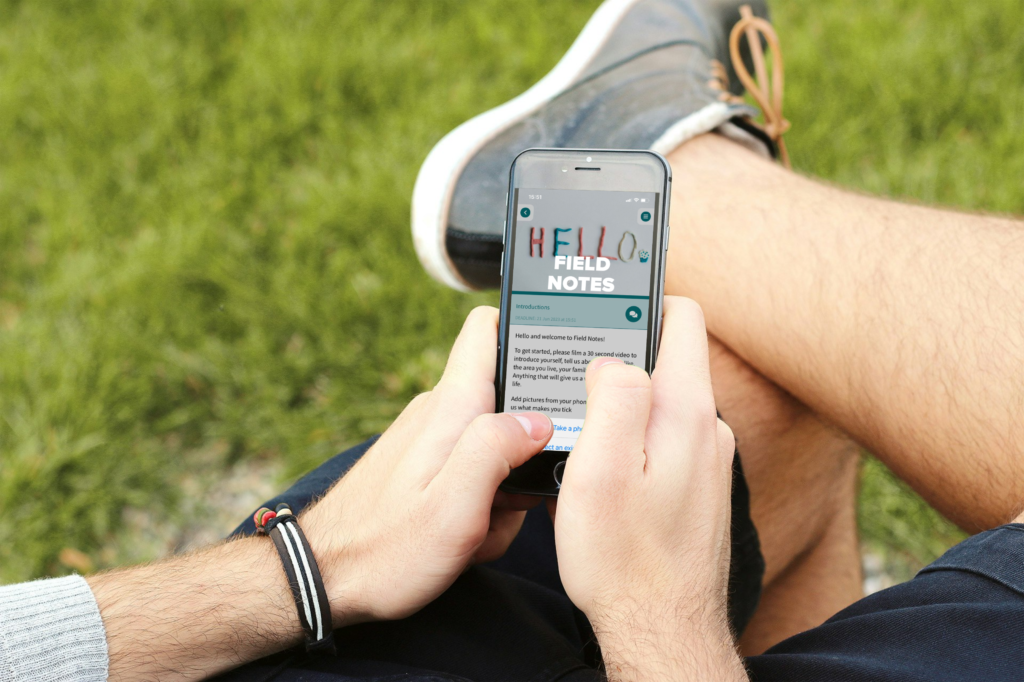
To move from observation to understanding, the Faster Horses team took advantage of the platform’s in-app messaging and probing tools. This functionality allowed researchers to ask follow-up questions to specific video entries, digging deeper into why a participant felt a certain way about immigration or public services. These two-way conversations built a rapport that turned the study into a dialogue, ensuring participants felt heard – often for the first time – rather than just studied.
The Impact
By using Field Notes to meet participants on their own terms, Faster Horses was able to create a visceral immersion into the world of disillusioned British voters today, presented to a very senior audience across the world of policy, that shapes ongoing debate. The results were covered in The Times in August 2025, and the Headline Report is available here.
Interested in finding out more about this project? Get in touch with giulia@fieldnotes.space or with Faster Horses here